Class 108 DMU

History

In 1955 British Railways announced their Modernisation Plan which would see the total removal of steam hauled trains and their replacement by diesel and electric traction.

Within this plan was an authorisation to build 4600 vehicles for what are now known as Diesel Multiple Units (DMUs) trains.

Derby Class 108

A large portion of the new trains were built by private manufacturers such as Metropolitan Cammel, Birmingham Railway Carriage & Wagon and Cravens, among others.

In addition, British Railways built large numbers within its own engineering works at Swindon and Derby. Our units were built at Derby Carriage Works, and it is known as a Class 108.

Year Built / Type

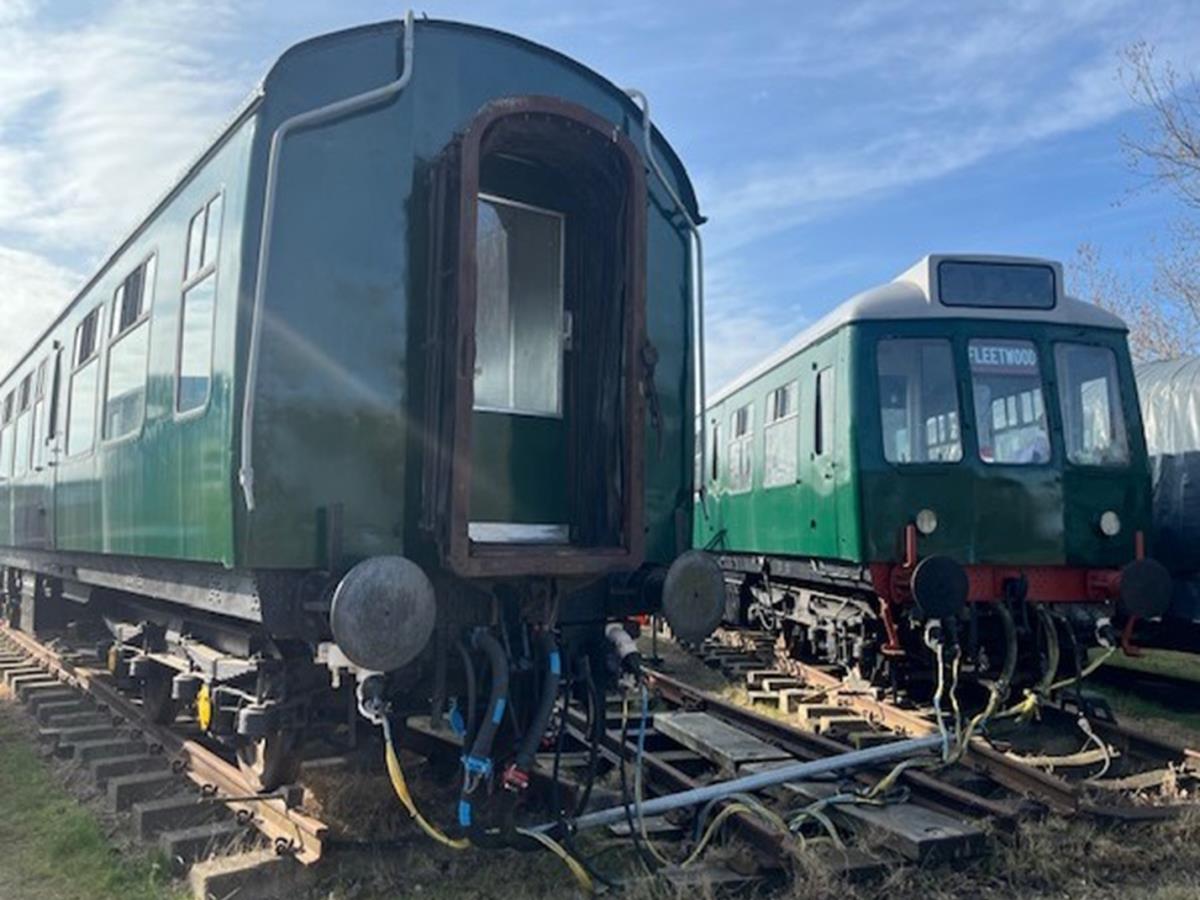
M51937 Driving Motor Brake Second (DMBS), Lot 36001. Diagram 634, Built October 1960

  • Driving: The carriage is fitted with a driving cab.
  • Motor: The unit is powered by two Leyland 680 engines (similar to that used in buses).
  • Brake: At the rear of the carriage is the Guards Compartment.
  • Second: Only Second-Class seating is installed.

M56484 Driving Trailer Composite Lavatory (DTCL), Lot 30602, Diagram 646, Built March 1960

  • Driving: The carriage is fitted with a driving cab.
  • Trailer: This carriage is unpowered.
  • Composite: The bulk of the seating is Second-Class with a small First-Class area behind the driving cab.
  • Lavatory: A toilet compartment is included.

M56484 was renumbered to M54484 in April 1983.
Allocation History

M51937

  • Newton Heath (Manchester)
  • Fleetwood
  • Allerton (Liverpool)
  • Tyseley (Birmingham)
  • Chester
  • Longsight (Manchester)
  • Landore (Swansea)
  • Laira (Plymouth)
  • Heaton (Newcastle)

M56484

  • Reddish (Manchester)
  • Trafford Park (Manchester)
  • Longsight (Manchester)
  • Allerton (Liverpool)
  • Chester
  • Newton Heath (Manchester)
  • Tyseley (Birmingham)

Although both carriages were allocated to some of the same depots, there is no record of them actually operating together in service. They were only paired up whilst in preservation.

Passenger Service - Years in Service

  • M51937: October 1960 to September 1992
  • M56484: March 1960 to October 1992

Areas Worked

Both carriages spent most of the working lives in the Northwest of England.

  • The Manchester sheds covered service around Greater Manchester, East Lancashire and lines around Preston and Blackpool.
  • The Liverpool depot covered non electrified lines in Merseyside.
  • Chester primarily supplied trains for Cheshire, the Welsh Borders, and along the North Wales Coast.
  • Tyseley provides trains for the Birmingham / West Midlands area.
  • Landore suppled trains to the lines in Southwest Wales.
  • Laira supplied trains to Devon and Cornwall.
  • Heaton supplied trains in the Newcastle area.

Local Connection

We know that M51937 was allocated to Fleetwood Shed from 3 June 1961 to 2 June 1962 as part of a batch of DMUs for use on the local Fylde lines.
Liveries Carried

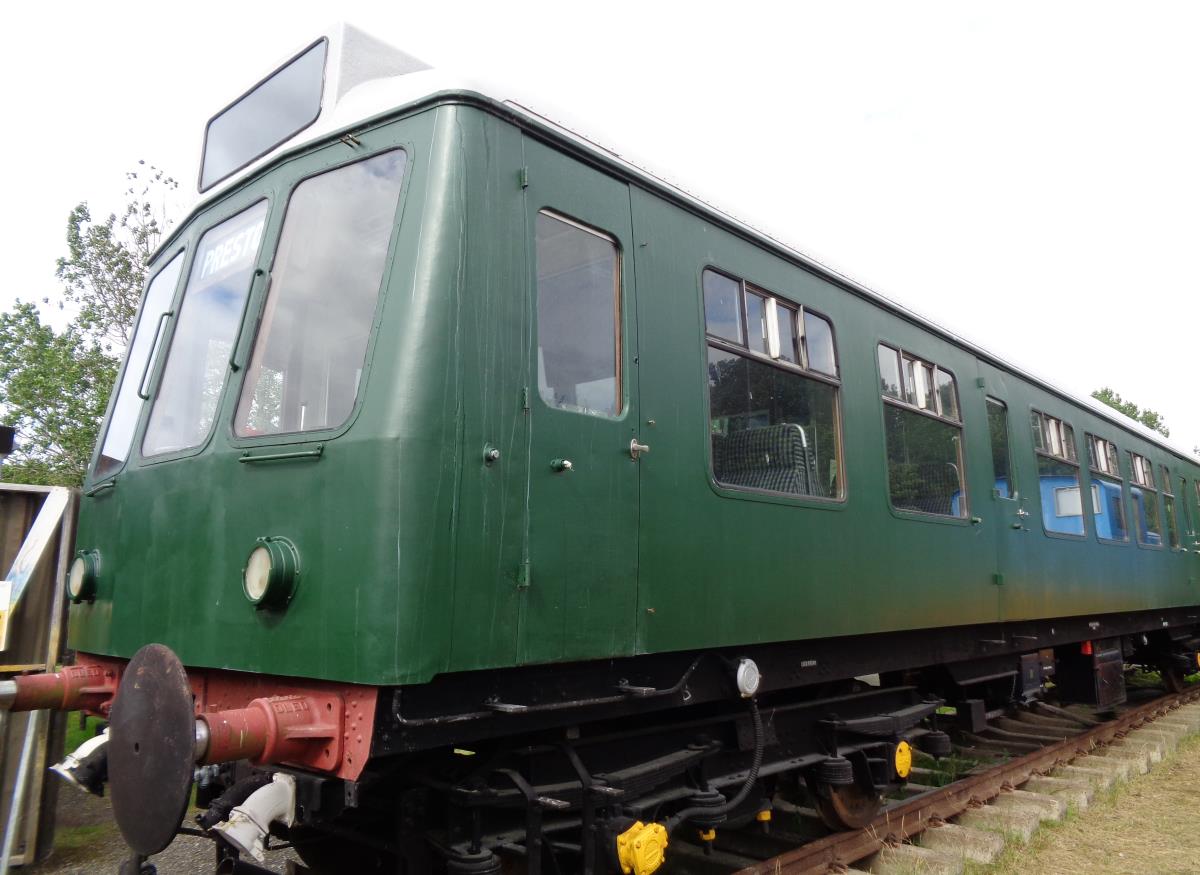
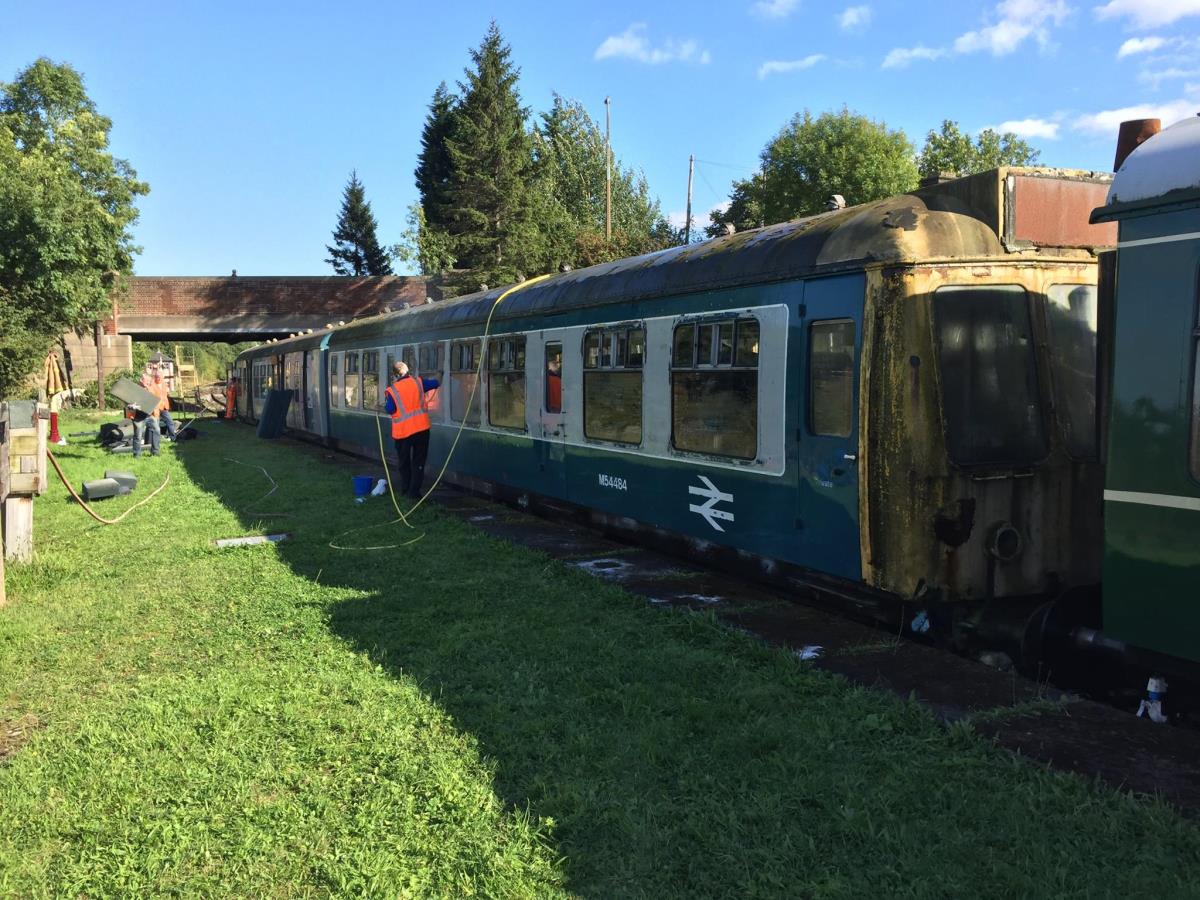
  • Both carriages would have entered service painted in British Railways Brunswick green with yellow whiskers on the cab fronts.
  • Later the yellow whiskers were replaced with a half yellow cab front below the windows. Repaint date not known.
  • In the 1960s British Railways repainted all DMUs into their corporate blue livery.(Repaint date not known.
  • In the 1970s British Railways started refurbishing DMUs to extend their working life, refurbishing the seating area and a repaint.
  • M51937 was refurbished in June 1977 and repainted into the new white with a blue stripe livery.
  • M56484 was refurbished t Swindon Works in April 1980 but re-appeared in the then standard blue and grey carriage livery.
  • M51937 ended its service life in the standard blue and grey carriage livery. Repaint date not known.

Unusual Modification Features

In September 1990, M51937 was one of two Class 108s modified as an experimental test unit for automatic gearing and allocated to Chester. The auto gearing project was to look at ways of reducing damage on changing gear to prolong the life of these units.

To make it easily identifiable to staff it carried "AUTO-GEAR" on the front under the left cab window. The wording had been removed by July 1992 suggesting the equipment had been removed.

Non Passenger Service

M51937: (Renumbered as ADB977806) - October 1992 to October 1993.

British Railways used some units, which were close to the end of their useful life, for other non- passenger purposes. M51937 had Sandite tanks fitted in the Guards Department, which dispensed a Sandite solution directly on to the rails to help with train wheel adhesion during the leaf fall season.

At other times M51937 was used for "Route Learning" i.e. where drivers familiarised themselves with the routes they were driving on.

Preservation History

  • Peak Rail: Both carriages were moved to Peak Rail, Buxton, in 1994, but appeared to have been in storage for nearly 15 years with little attention.
  • Midland Railway Centre: In June 2008 both carriages were moved to MRC Butterley to join the DMU Group Fleet there, and work started on the restoration of M51937. However, by 2011 restoration work had stalled and they were put up for sale.
  • PWRS: We purchased both carriages in November 2015.

Work Carried Out by PWRS

Butterley

We initially contracted MRC Butterley to carry out some work on our behalf and this was because we thought it was beyond our skill level and capabilities at that time.

Work carried out at Butterley:
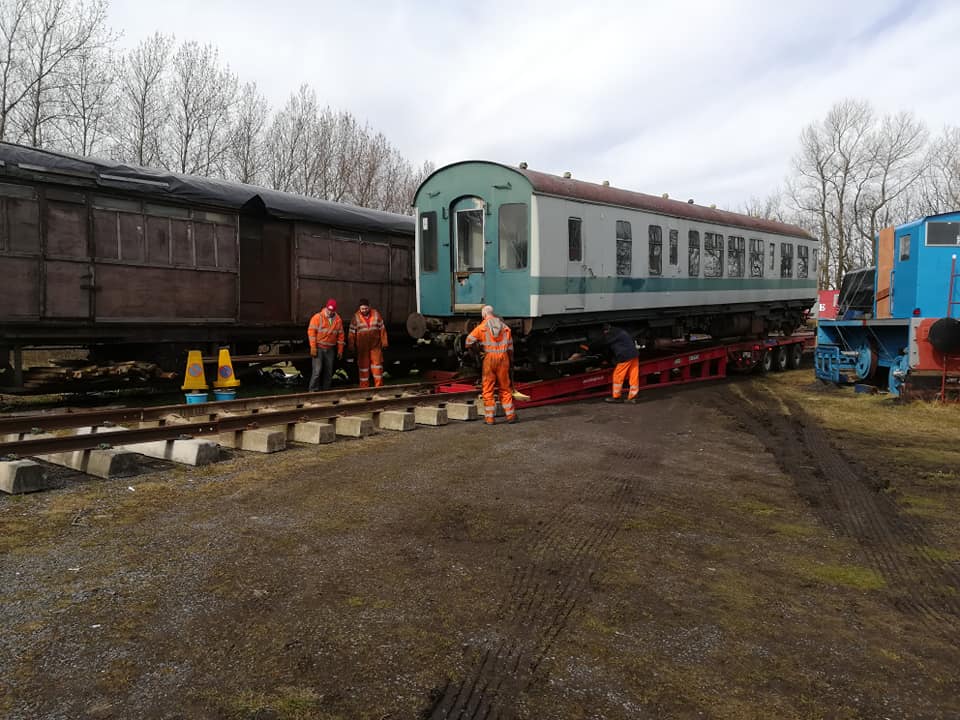
  • Replacement of corroded steel work to the cab and rear of M56484.
  • Riveting of both carriage roofs.
  • Replacement of one buffer.
  • Fixing of slack spring on a bogie.
  • Work on fixing an exhauster problem.

It was anticipated that we would hold members workdays at Butterley to carry out some work ourselves.

Move to NPL

Late in 2019 we decided to move the carriages to our base at NPL Thornton, because it was proving difficult to arrange members workdays due to the travelling distance / travel time involved, plus the work carried out by MRC Butterley was eating up large amounts of our scarce funds.

We had also recruited some new members with heritage railway experience, and knowledge of engines so felt more capable of undertaking restoration work.

So, on 16th March 2020 both carriages arrived at North Car Park, NPL.

Work Carried Out Since

After arriving at NPL in March 2020 we were immediately hit by Lock Downs restrictions because of COVID. Once we had sorted out how we could continue operating within the restrictions and guidelines set, we commenced working on the two carriages.

The previous owners had carried out quite a bit of work on M51937 including replacing steel work on the front and rear of the carriage, repainting the underframes, and a partial repaint of the body work to the White with Blue Livery.

Unfortunately, nothing had been done on M56484 and it looked quite tatty in comparison.

We initially started most restoration work on M56484 allowing separate access to M51937 for investigation work into the engines, exhauster, and electrics.
Work on M56484

  • Stripping down of the cab, complete refurbish of cab controls, drivers chair, desk, wall, and ceiling.
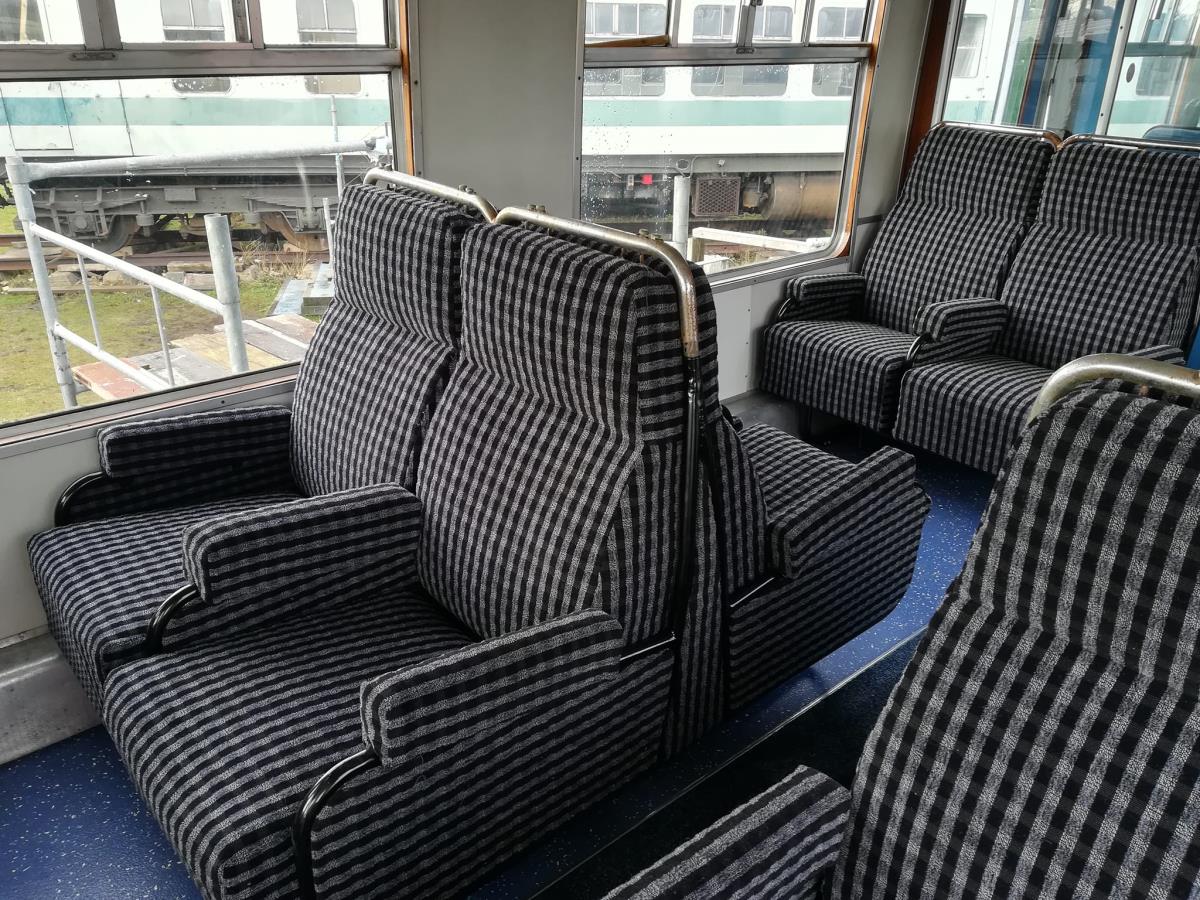
  • Stripping down of passenger compartment areas, cleaning of walls and ceiling, refurbishing of heater covers, cleaning of window and wall trims, and the fitting of a new floor covering.
  • Complete refurbishment of First-Class seating area, restoration of imitation wood compartment walls and doors, fitting of recovered seating and new flooring.
  • Resolution of leaking roof tanks and rebuilding of damaged ceiling.
  • An overhaul of the Toilet compartment, sink and door, plus fitting of new floor covering.
  • Sand blasting of underframes, buffer beams and bogies. Areas treated and painted.
  • Complete sand down and repaint of roof and then painted (primer / undercoat and gloss).
  • Complete sanding down of carriage sides, front and rear, areas primed and painted with undercoat.
  • Final coat of green paint to outsides of carriage.
  • Replaced all window rubber seals.

Work on M51937

  • Resolution of Exhauster issue taken over from MRC.
  • Stripping down of the cab, complete refurbish of cab controls, drivers chair, desk, wall, and ceiling.
  • Stripping down of passenger compartment areas, cleaning of walls and ceiling, refurbishing of heater covers, cleaning of window and wall trims, and the fitting of a new floor covering.
  • Stripping down of the Guards Compartment, repairs to leaking ceiling, new floor, replacement wood to both double doors and repainting the walls.
  • Rebuilding of the sliding door on the corridor connection.
  • Complete sand down and repaint of roof and then painted (primer / undercoat and gloss)
  • Complete sanding down of carriage sides, front and rear, Areas primed and painted with undercoat.
  • Cleaning up the buffer beams. Areas treated and painted.
  • Final coat of green paint to outsides of carriage.
  • Replaced all window rubber seals.

Help From other DMU Groups

As work has progressed, we discovered that some parts were either missing or damaged beyond repair. Fortunately, we have been able to obtain the following parts from other groups:

  • A full set of brake shoes to be used on M56484.
  • Spare invertors for the internal lighting system.
  • Spare Guards Department light fittings and roof vents.
  • Sliding door handles.
  • Glo plug.
  • Vestibule Floor Heater covers.

Thanks to the following:

  • Dean Forest DMU Group
  • East Lancashire Railway DMU Group
  • East Somerset Railway DMU Group

In addition, we have received extremely useful technical help from the other groups in particular, The Dean Forest DMU Group and Llangollen Railway DMU Group.

Last Updated: 10th March, 2024

More Information

More information about our Class 108 DMU is available on the following pages.