Diesel Multiple Units (DMUs) powered by underfloor diesel engines served as the workhorses of British Rail for decades. Because passengers sat directly above these engines, robust fire detection and suppression systems were vital for safety.
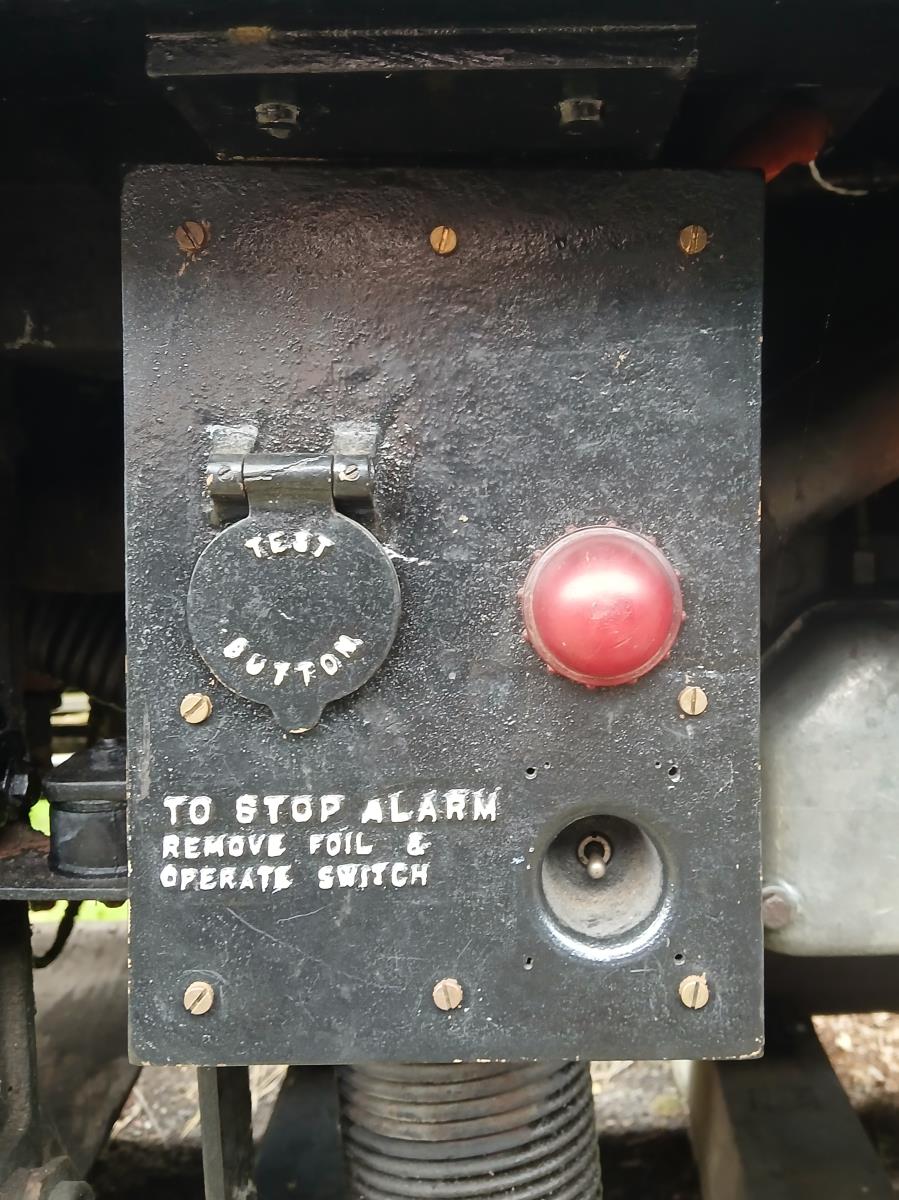
The DMU fire circuit panel
As a heritage 1960 vehicle with legacy fire systems, restoration of our Class 108 DMU presented us with a challenge.
The original fire detection system wrapped around the engine used a pyrotechnic component.
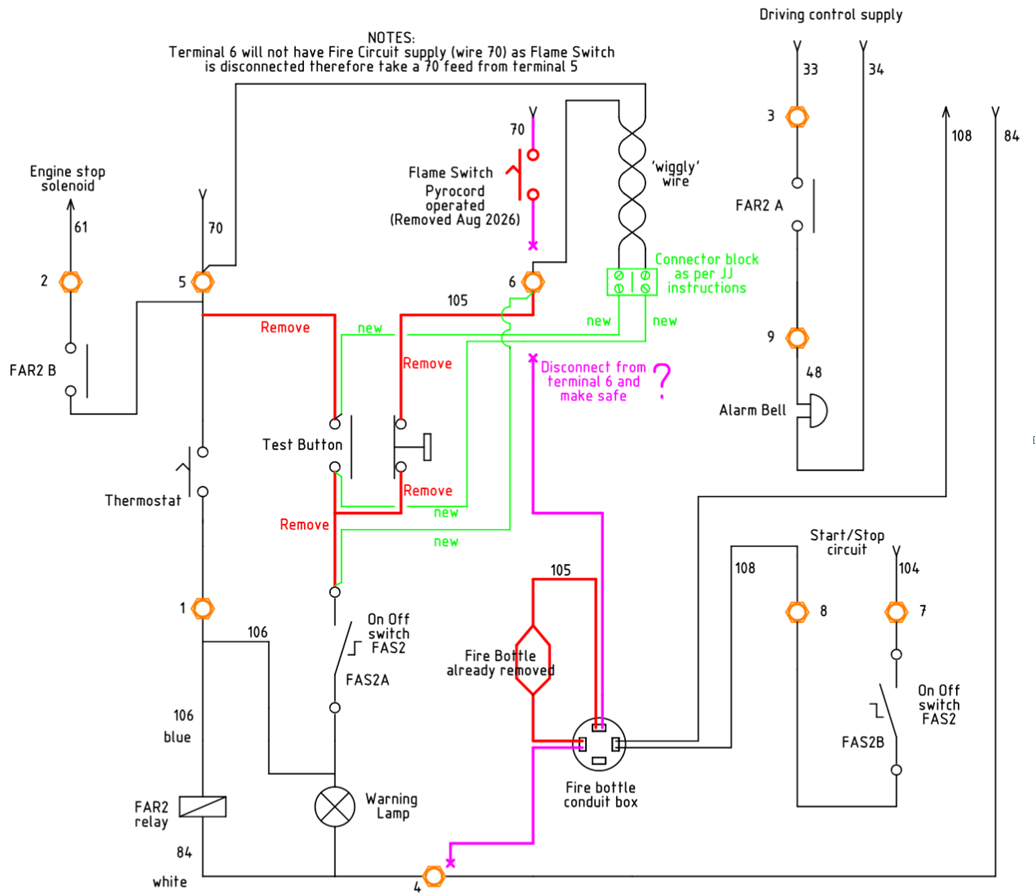
Ciruit modification diagram © First Generation DMU Group
In the presence of a flame, this component triggered an explosion to close an alarm circuit in the driver's cab, instantly shutting down the engine and flooding the bay with Halon gas.
While Halon rapidly smothers chemical and electrical fires without leaving residue, it was identified some time ago as a major culprit in depleting the ozone layer.
Following the 1989 Montreal Protocol, Halon was banned and the gas bottles were removed.
Today, on heritage units, train staff rely on portable extinguishers to put out any fires manually.
In addition to the missing Halon systems, the original pyrotechnic detection components are deteriorating and pose unnecessary risks during routine maintenance.
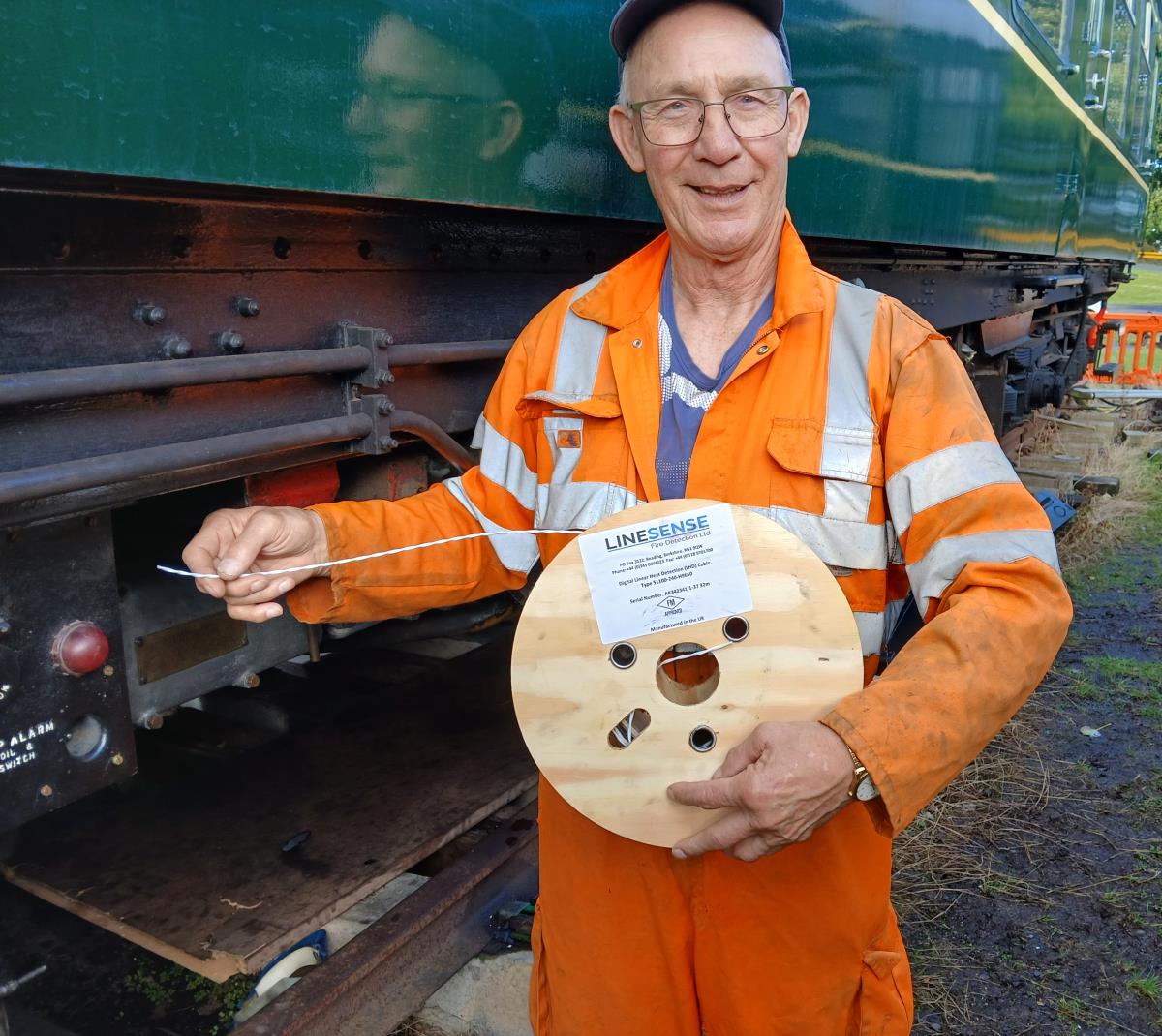
Geoff Ogden with donated Linesense™ wire
To modernise the system safely, the PWRS sought to source a modern replacement: a digital heat-detection wire manufactured by Linesense™.
The wire consists of a twisted pair of conductors insulated from each other.
If a fire or extreme heat occurs, the outer insulation melts at a precise pre-set temperature, bringing the two wires together to trigger the driver's alarm system.
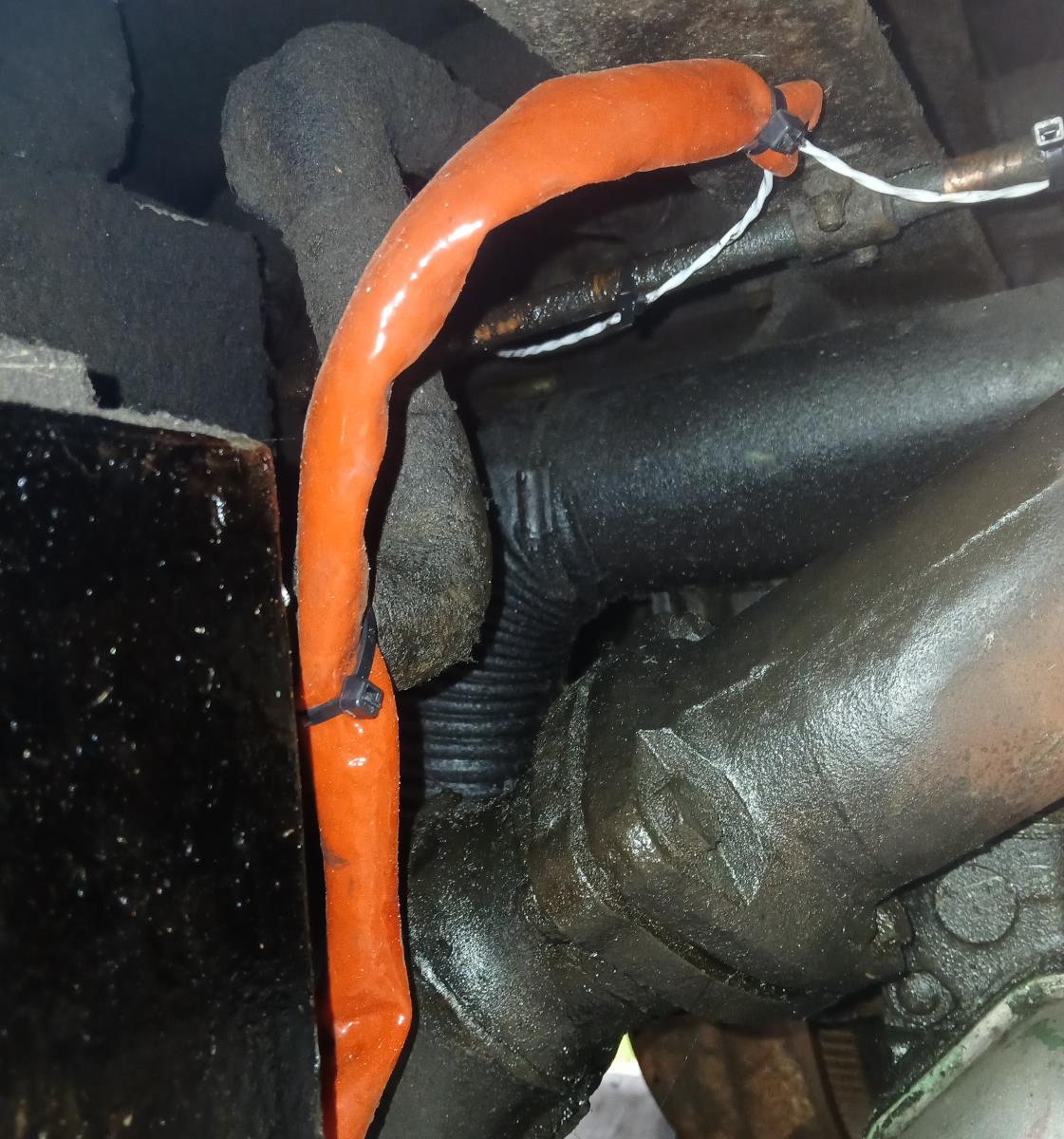
Linesense™ wire wrapped around engine
Implementing the modification required an updated electrical wiring diagram sourced from the First Generation DMU Group and 10 metres of the specialised Linesense™ twisted-pair cable.
However, we hit an obstacle. The wire is very expensive and normally sold only in large commercial reels far exceeding our 10 metre requirement.
This is where Joshua Risk of Linesense™ stepped in:
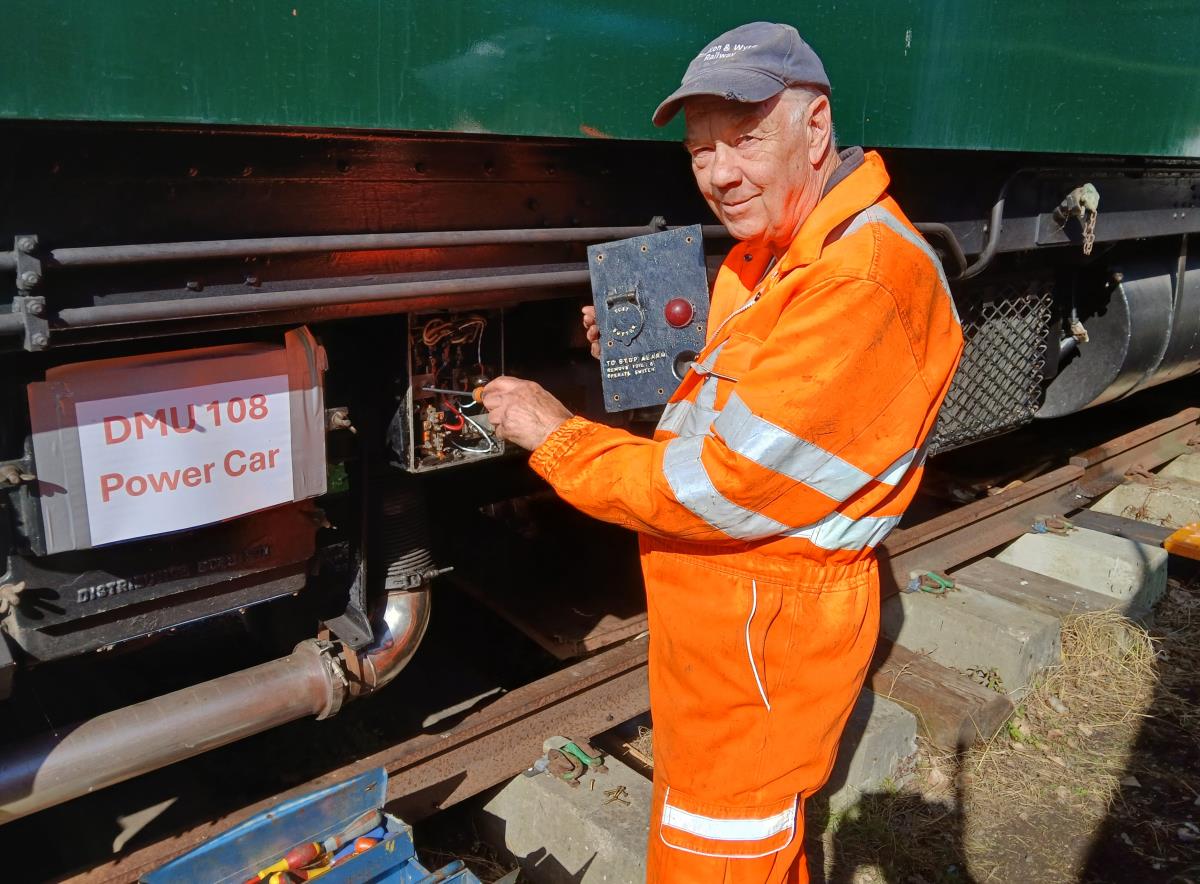
Richard Hoggarth modifying the fire panel
Thanks to the generosity of Joshua Risk and Linesense™, the PWRS has now successfully completed the fire detection system modifications on both engines of our Class 108 DMU.
The society is eternally grateful for their support in ensuring our DMU will run safely when it re-enters service.
Geoff Ogden
PWRS
Sign up for Membership for just £15 (Adult), £5 (Child) or £20+ (Associate).
Volunteer your time.
Download and complete the Rolling Stock Fund and / or Vintage Carriage Appeal donation form.
Donate via PayPal or Credit Card.
Support us when online shopping.

Donate electronically to our bank account.
Bank: Santander
Account Name: Poulton & Wyre Railway Society
Account Number: 89012757
Sort Code: 09-01-28


© Poulton & Wyre Railway Society 2018-2026
Donated by: EasierThan Website Design, Thornton Cleveleys